
Commercial refrigerator repair in Richmond
Request commercial refrigeration assessment in Richmond hospitality and retail properties, with cabinet details and operating requirements specified.
Request Service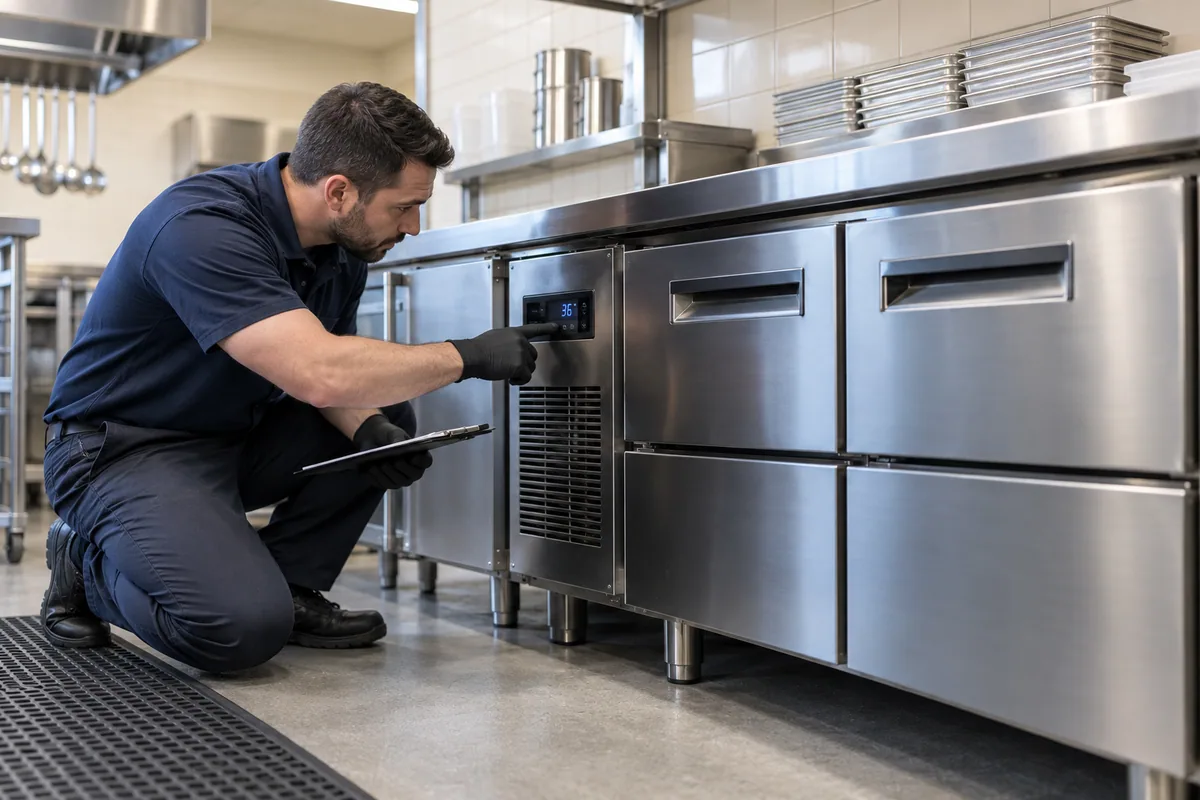
Identify the equipment before the service window.
For a Richmond restaurant, hotel or retail unit, include whether the affected equipment is a preparation counter, display case, reach-in cabinet or walk-in system. Share the model and fault display, since these systems can need different expertise and parts.
Schedule preferences should account for food preparation, guest areas and delivery access. State who can meet the technician and authorize the scope. Use your established food-safety process for affected stock; a request for equipment repair does not confirm that products remain safe to use.
Problems to describe
- The cabinet is not maintaining the expected temperature
- An alarm or error appears
- The unit runs unusually or stops operating
What the assessment covers
The equipment type, controls and cooling symptoms determine the appropriate specialist. Refrigerant systems, electrical components and manufacturer support requirements are reviewed as part of the scope.
Useful details and photos
- Model and serial label, if safely accessible
- Displayed temperature and alarm details
- Business hours, equipment access and responsible site contact
Scope and practical limits
Repair timing and parts availability vary. Follow your established food-safety procedures for affected stock; an equipment request does not determine whether stored products are safe.
Pricing, any assessment fee and work authorization are agreed before service. For several properties, include a site reference and on-site contact for each request.
Multi-location repair coordination →Commercial refrigerator repair: common questions
Can you assess a walk-in cooler?+
Include that it is a walk-in system with the equipment details. It may require a different specialist from a self-contained refrigerator.
Should I include recent service history?+
Yes. Previous faults, work records and when temperatures changed help the technician assess a recurring problem.